
Southwest Airlines has officially entered a new era as of January 27, 2026 - the start of assigned seating. After decades of open seating and a unique cattle call boarding process, assigned seats are now offered on all Southwest flights.
These seats have been on sale since summer 2025, so we've already learned a lot about the rules and restrictions and seen changes to the booking process on Southwest's app and website. Most importantly, we've also learned just how much extra seat assignments are going to cost.
I've already booked multiple trips for members of my family that include assigned seats, so I've been able to test out a lot of the variables. As a frequent Southwest traveler (and former attorney not scared of fine print), I have spent the last few months digging in deep to understand the nuances of the new system. There are some features that I think are better than many of Southwest's competitors, but there are also some traps for the unwary and uninformed.
Here are the essential strategies you need to know to navigate Southwest's new seating rules most efficiently and cost-effectively.
1. Seat assignments are included all fare classes except Basic.
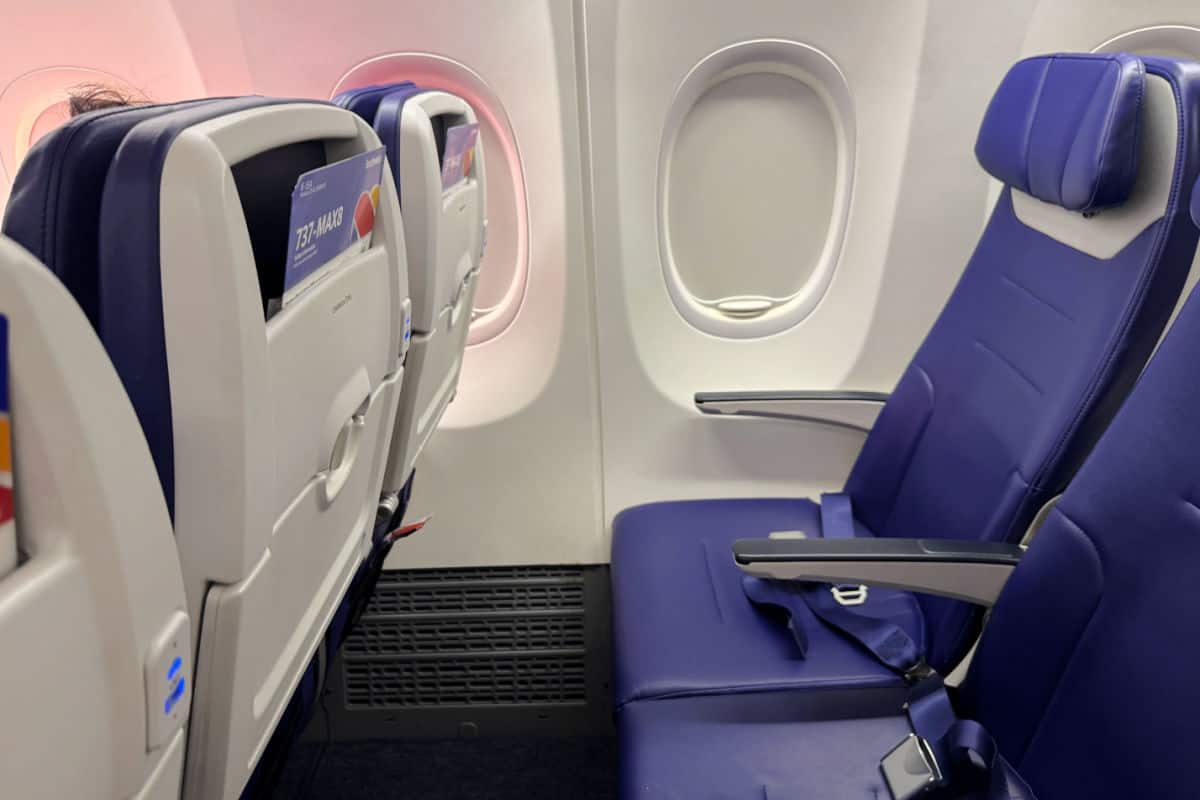
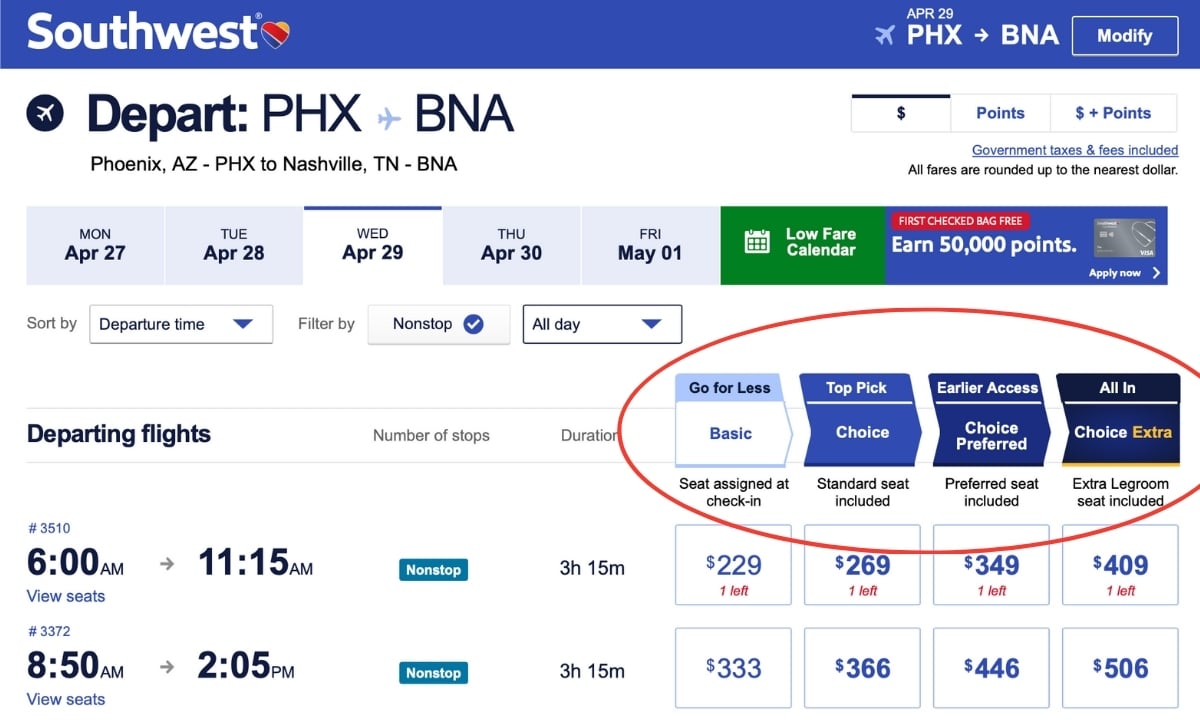
Like most other domestic carriers, Southwest includes seat assignments with most of the fares it sells. Southwest has 4 fare classes (a.k.a. bundles), and it's only the cheapest basic economy fare ("Basic") that doesn't include a seat assignment at the time of booking.
Related: Which of Southwest's New Fare Types Should You Purchase
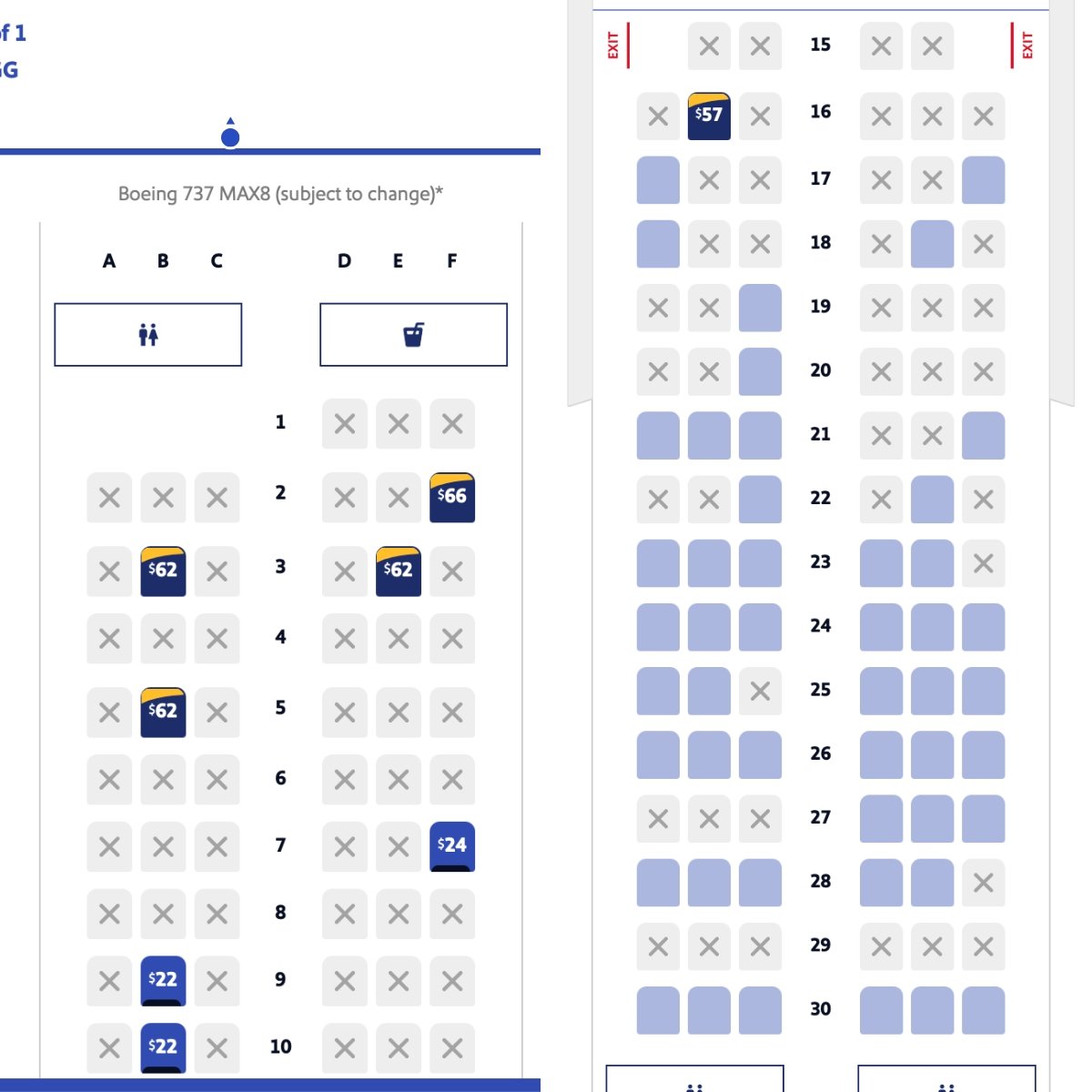
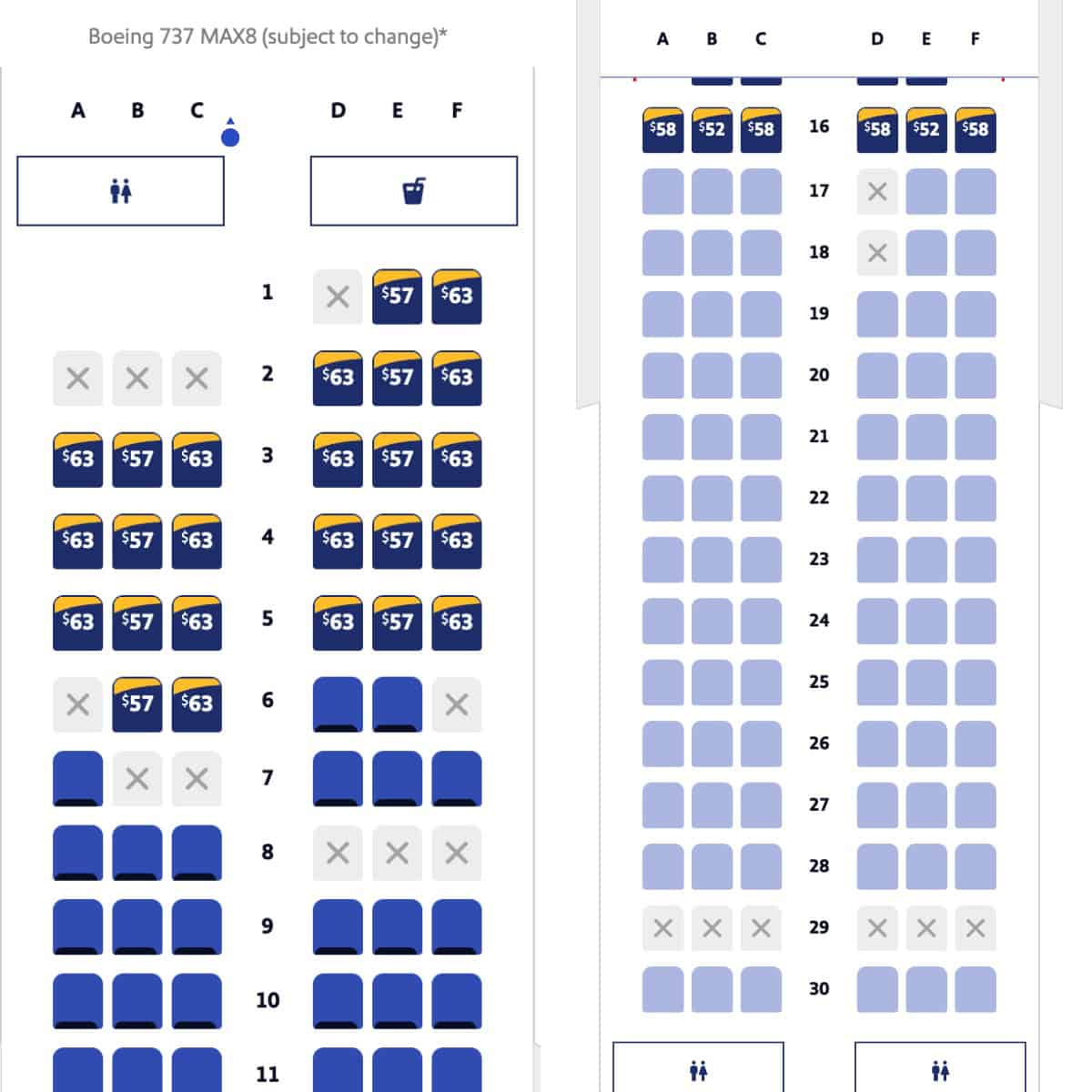
The next most expensive fare, "Choice," is akin to regular economy on most airlines and includes a free seat assignment. Passengers who purchase Choice fares will see a number of Standard economy seats in the back half of the plane available for selection at the time of purchase for no additional fee. The seat map will look similar to the following, with the light blue seats available.
Southwest's two more expensive fares unlock additional seating options. "Choice Preferred" includes a Preferred seat (a regular economy seat in the front half of the plane) and "Choice Extra" includes Southwest's brand new Extra Legroom seats.
So where does that leave passengers who book Basic fares to sit? Basic fare passengers will get an automatically assigned seat when they check in at up to 24 hours before the flight (with no chance to change what's assigned without paying a fee). Because these flights are just starting to fly, we don't yet know fully just how good or bad these seat assignments will turn out to be.
Will only middle seats be left or will parties tend to be seated together but in the back of the plane? Only time will tell. If other airlines' basic economy fares are any indication, it seem likely that Basic fare passengers will end up in scattered middle seats the majority of the time. This seems especially likely with Southwest flights flying fuller than ever the last few years.
Editor's Note (2/18/2026): With several weeks of data points now in, it seems like Basic fare passengers are regularly getting auto-assigned middle seats more often than not, as predicted. And parties are regularly being separated.
2. You can buy many seat assignments a la carte at booking.
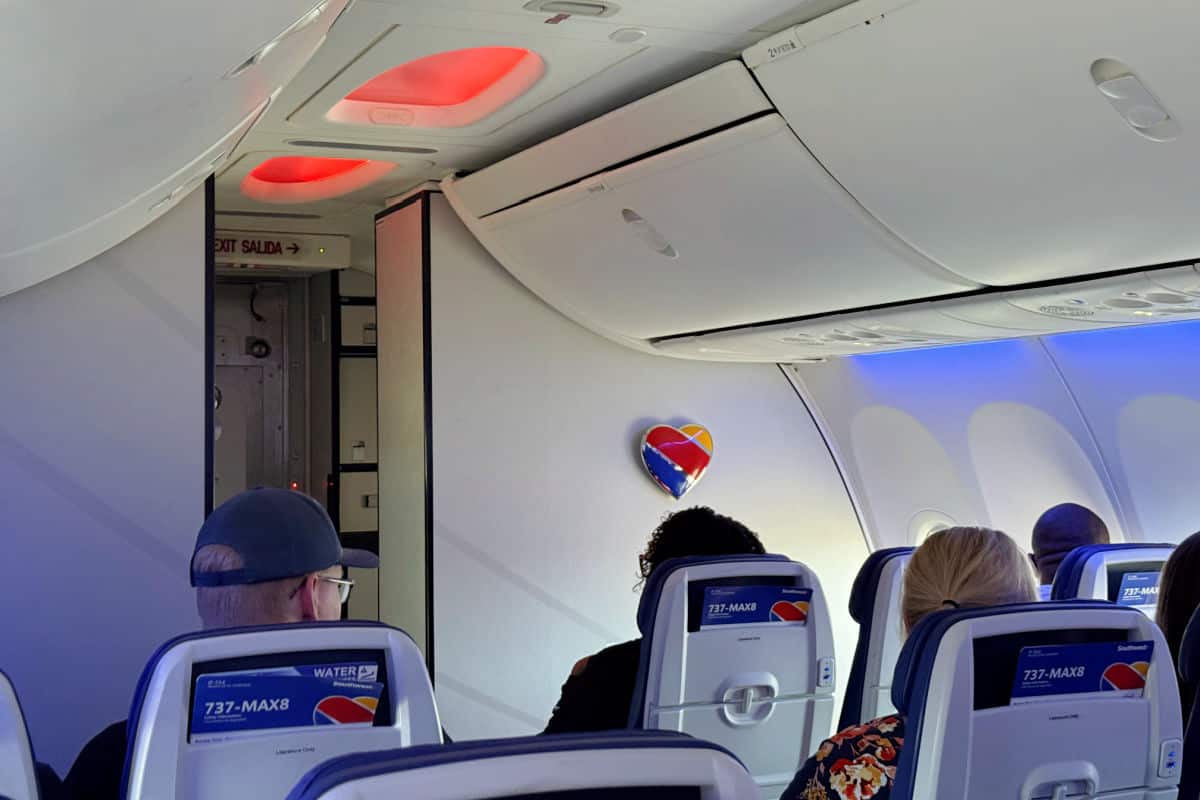
Although many passengers who want advance seat assignments at the time of booking will go ahead and buy up to the Choice fare class, Southwest also sells seat assignments a la carte.
That means you don't have to buy the fare class that promises the seat assignment you ultimately want. In fact, in some situations you probably shouldn't. Why? Because you could be paying too much for some other features of the fare you may not need or want. Instead, you should look closely at Southwest's a la carte seat pricing and availability and compare that to the prices and perks included in the fare classes.
To test out all of the seating options, I ran dozens of flight searches logged into multiple different Southwest accounts of my family members, some of whom have no status and no Southwest credit card. I looked at different routes and aircraft type (Southwest flies 3 different aircraft with 2 different seating configurations). And I also looked at non-stop and connecting itineraries.
I spotted the following data points of note:
- Choice fares (one-way) tend to cost about $30-45 more than Basic fares.
- If you select a Basic fare, Southwest will offer seat assignments available for purchase a la carte later in the booking process. These seat assignments can be as cheap as a few dollars with prices usually in the $20-40 range for Standard seats (if they are available).
- Some Standard seats are generally available for a la carte purchase on Southwest's Boeing 737-800 and 737-MAX8 aircraft, but often there are no Standard seats on 737-700 aircraft for purchase on Basic fares. Instead, Preferred seats are often sold at about the same $20-40 price as Standard seats on a larger aircraft.
- If you are on a route with a connection, you'll have to pay multiple seat fees purchasing a la carte - one for each flight segment.
As you can see, buying a Standard seat assignment a la carte (when available) is usually a bit cheaper than buying up to the Choice fare if you are flying on a non-stop route where only one seat purchase would be needed. For example, on the OAK to SNA route I often fly to Disneyland, a Choice fare is usually exactly $30 more than a Basic fare. The cheapest a la carte seat assignments sold at booking are $21 or $22 on that route (for Preferred seats). Flyers pinching every penny could pay a bit less purchasing seats a la carte instead of buying Choice fares.
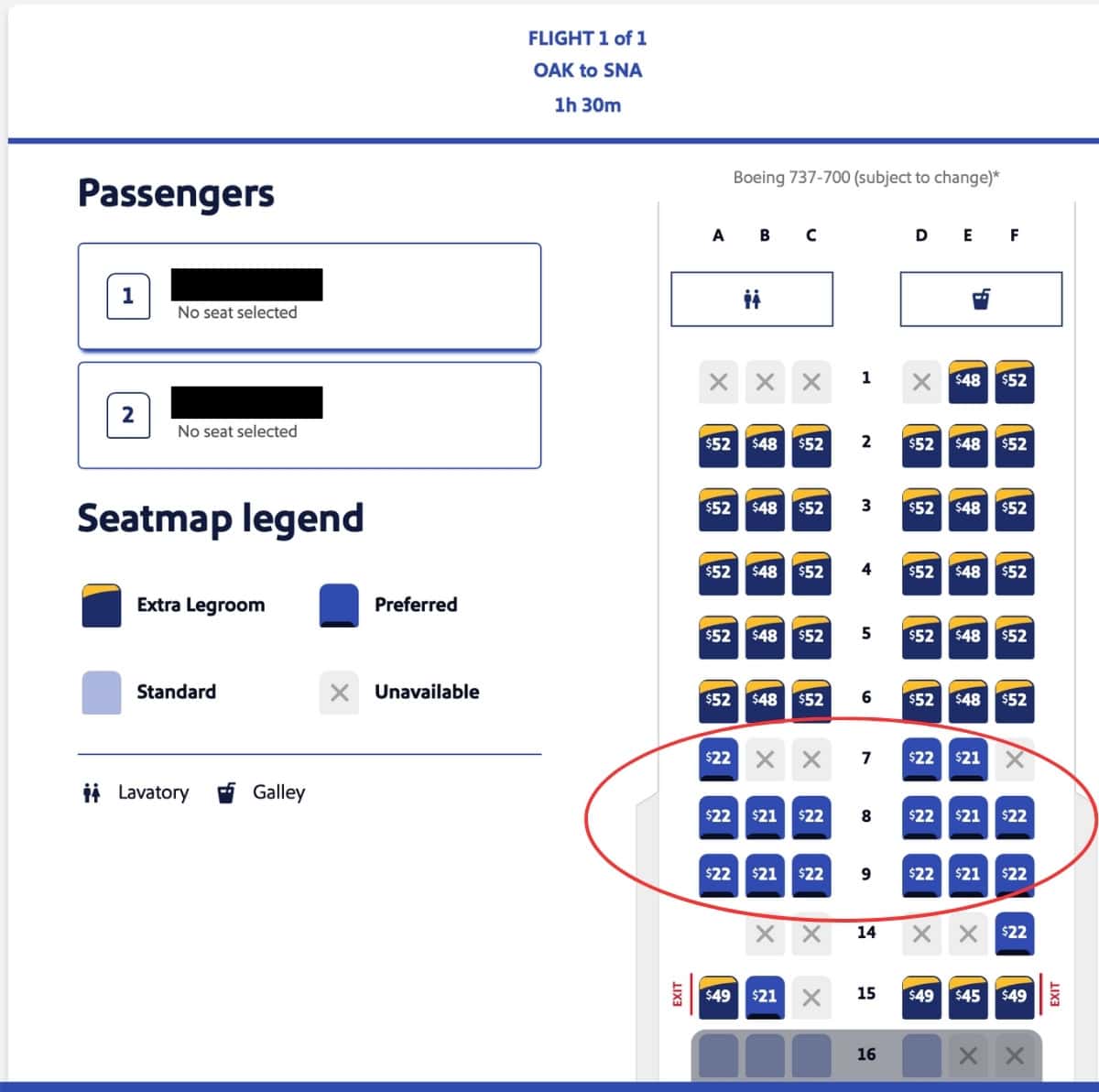
In this instance, however, I'd actually still recommend that the vast majority of passengers buy the Choice fare. It's a few dollars more, but for those few extra dollars you get other benefits that come with the Choice fare beyond a seat. That includes a fare credit that is valid for 12 months instead of 6 if you have to cancel, higher Rapid Rewards points earning on the flight (6 points per dollar spent vs. 2 points per dollar spent), free same day standby/changes, and potentially a slightly earlier boarding position.
Say, however, that you really just want an extra legroom seat but don't want all the other perks of Southwest's most expensive fare (Choice Extra). That fare includes features like Priority Boarding or an included checked bag that a lot of travelers don't need. In that case, it can be a lot cheaper to buy that extra legroom seat a la carte in combination with a lower fare class instead of buying Choice Extra.
Take the same example of an OAK to SNA flight where a Basic fare is $128, Choice fare is $158 and a Choice Extra fare is $268.
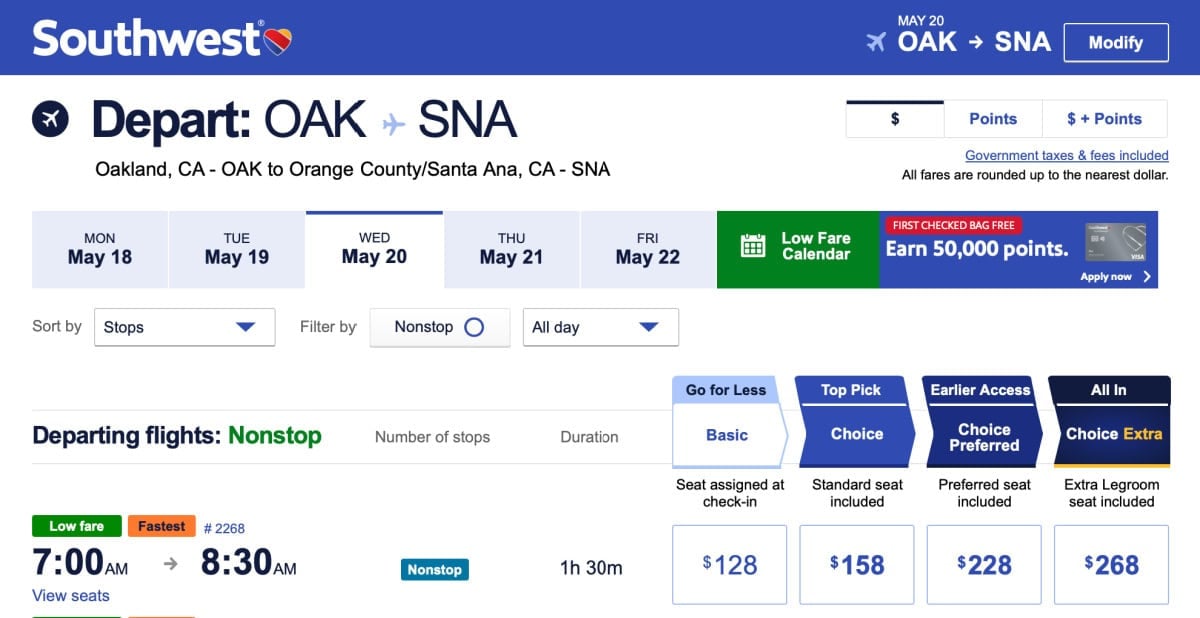
If you buy a Basic fare, an a la carte extra legroom seat is available for separate purchase at $48-52 (see screenshot below), for a total flight cost of $176-180. That's nearly $90 in savings compared to buying Choice Extra at $268.
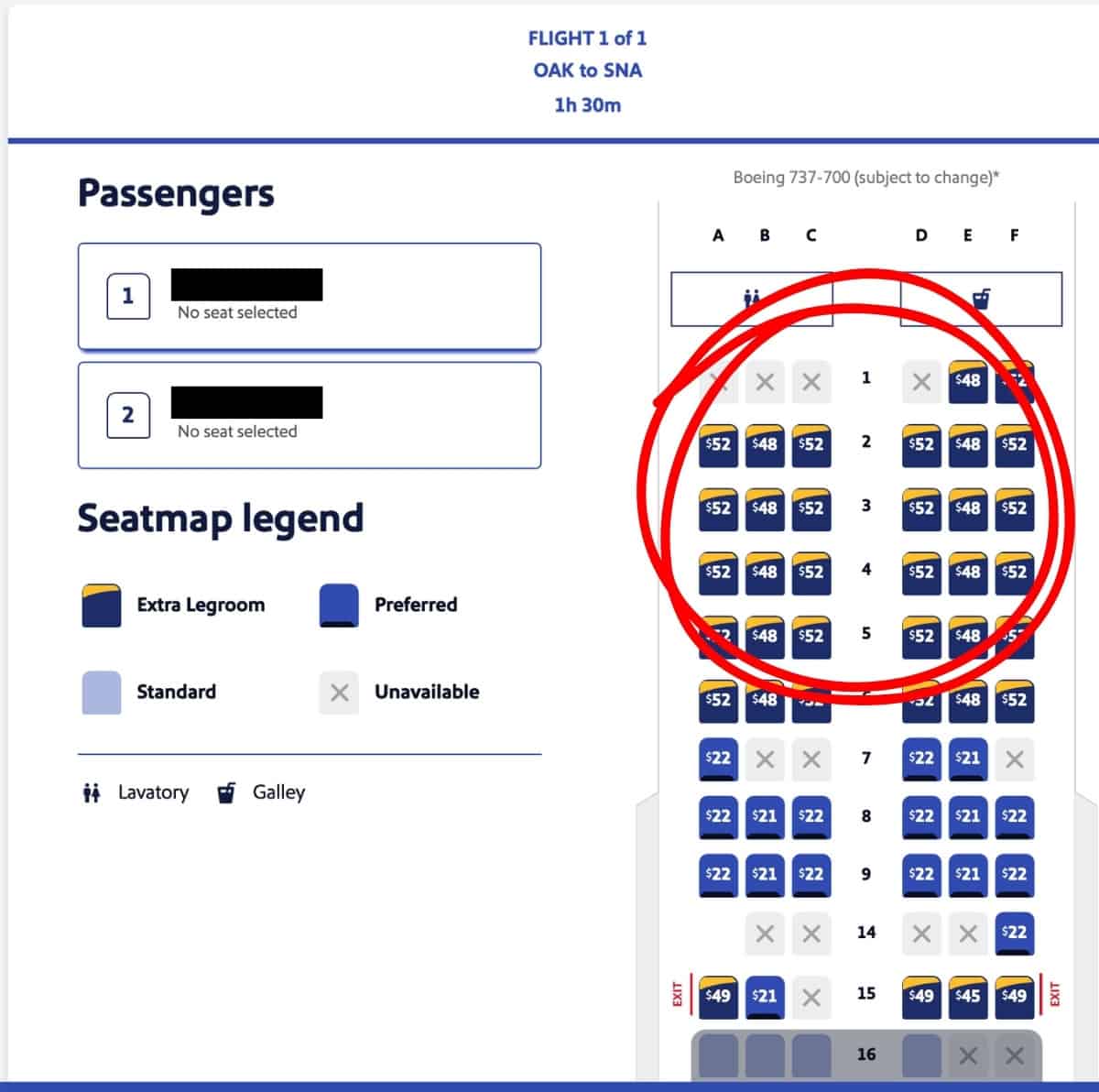
Even if you prefer the better flexibility of a Choice fare, you'll still come out ahead buying your extra legroom seat a la carte. With the Choice fare, an extra legroom seat is available for $37-41 extra (see screenshot below), for a total flight cost of $195-199. That's still roughly $70 in savings vs. Choice Extra.
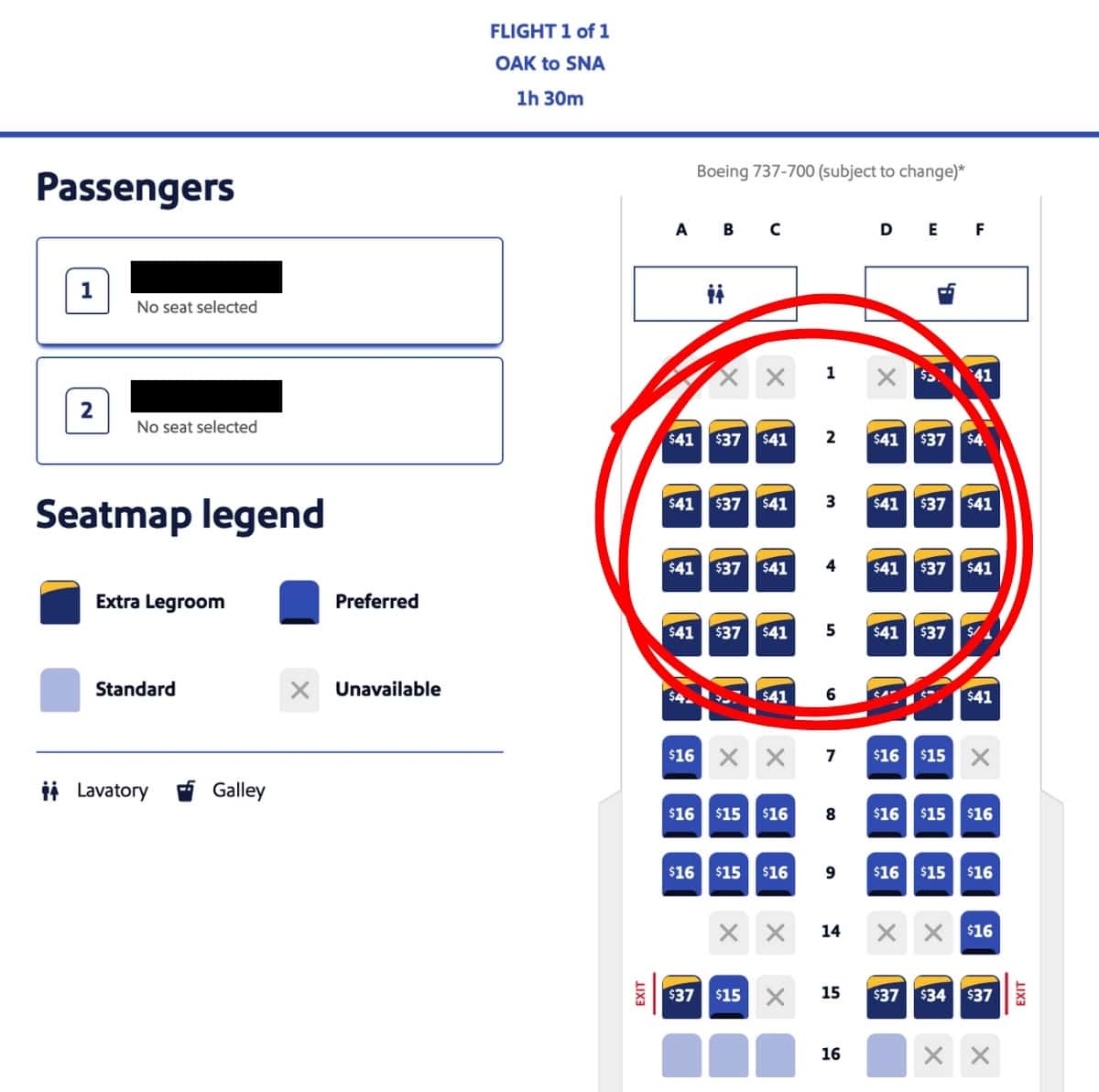
The most important thing to note about comparing a la carte seat prices vs. fare class prices is that Southwest's booking process makes that difficult and a bit tricky to do. (To be fair, Southwest isn't alone in this annoyance - all the other U.S. airlines do it the same way.)
You can see the fare class costs right up front on the search results page. But to see the a la carte seat prices, you have to go through two more pages in the booking process - all the way through the step of entering passenger names and information. The a la carte seat prices are then presented right before the final payment screen. So a lot of passengers may not know that a price comparison is even possible or that seats are sold a la carte.
Even though it takes a minute or two more, take the time for these extra clicks if you want the best deal, especially if you are considering more expensive Choice Preferred or Choice Extra fares.
3. If you have a Southwest credit card, you may get free seating (but the perk depends on the card).
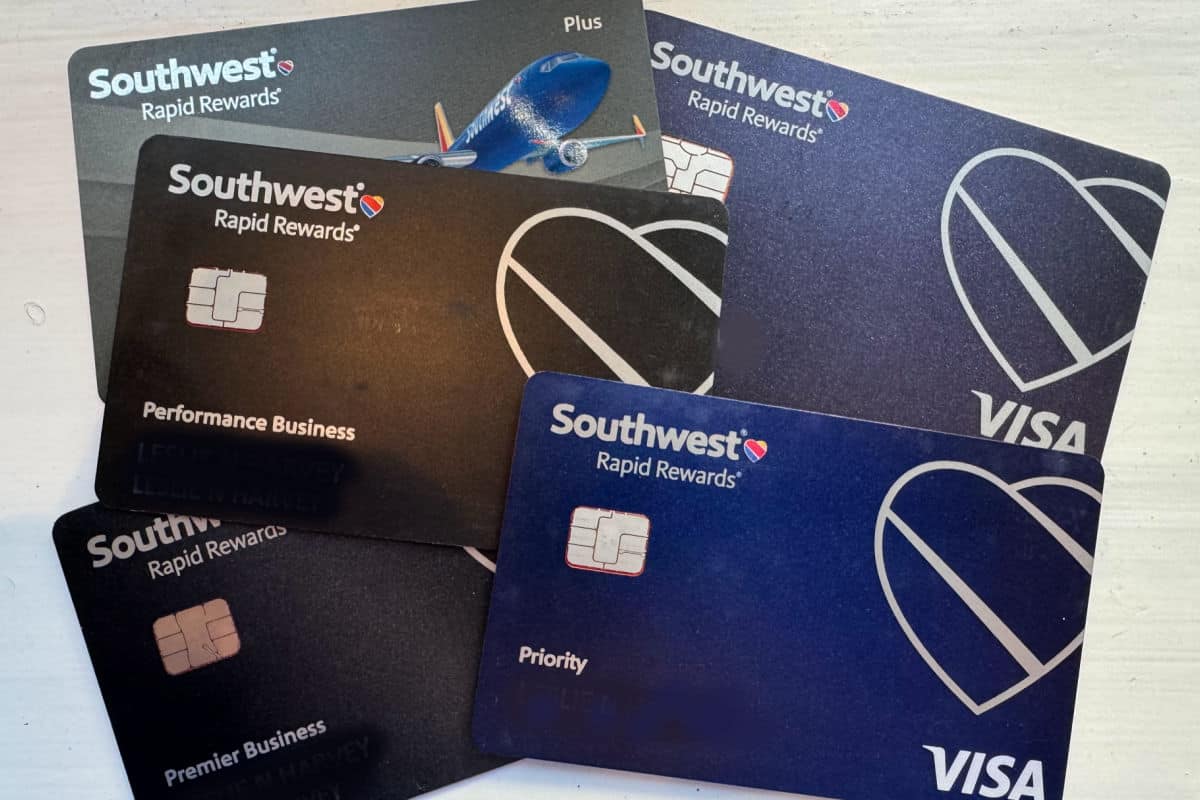
If you have one of the co-branded Southwest credit cards, throw everything you know about seating so far out the window. Why? Because those credit cards come with some seating benefits. What those benefits are and how early they come into play, however, varies based on card type.
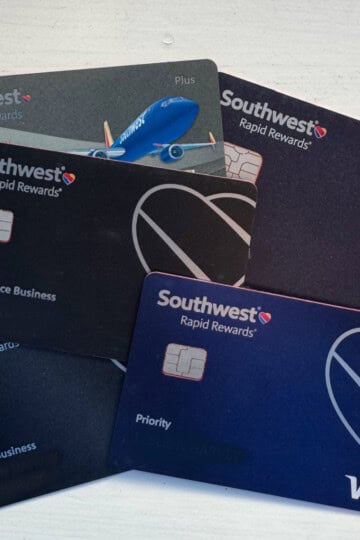
Southwest offers three personal credit cards in order of least to most expensive annual fees: Plus ($99), Premier ($149), and Priority ($229). It also offers two business cards: Premier Business ($149) and Performance Business ($299). (See much more detail in my Southwest credit card comparison guide)
If you have one of the three least expensive cards (Plus, Premier or Premier Business) you won't get to book seats at the time you book your flight if you select a Basic fare. But you also won't be dead last in making a selection. Instead, you get to select your own seats at up to 48 hours before your flight. This seat selection benefit extends to the card holder as well as to all other passengers booked on the same reservation.
Plus card holders can select Standard seats at this time. Premier and Premier Business card holders can select Standard or Preferred seats. The bottom line? Card holders get a jump on all other Basic fare passengers who don't get assigned seats until 24 hours in advance at check in. This improves their chances of getting a seat of their choice or seats together with their travel party even when purchasing discounted fares.
Travelers who hold the two most expensive fee cards (Priority or Performance Business) are even better off. They and their travel companions on the same booking get to select any Standard or Preferred seat at the time of booking, even when booking Basic fares. See the screenshot below for what a Southwest seat map looks like when purchasing a Basic fare with one of these cards (Preferred seats are dark blue and Standard seats are light blue).
And if there is availability in Extra Legroom seats at less than 48 hours in advance of a flight, they can also select those for free.
Even though Southwest has recently raised the annual fees on its credit cards and reduced some of the other perks, I still think it's very helpful for anyone who travels Southwest semi-regularly to get a co-branded credit card (review card features and apply here). Depending on what credit card you have, it can really help with the seat assignment scramble and save you big instead of needing to pay for higher fare classes or a la carte seat fees.
I also think Southwest's credit cards are more valuable than comparable credit cards from other U.S. airlines because they include checked bag fees AND seat assignment priority. Several United and American credit cards, for example, include free checked bags like Southwest's cards all do. But United's and American's cards don't include any perk or preference at all for card holders when it comes to seat assignments on basic economy fares.
4. The seat you are assigned may affect your boarding position.

Southwest's A-C group boarding is now officially a thing of the past. In its place is new boarding order with at least 8 but more like 10-11 groups: pre-boarders, priority boarders, and Boarding Groups 1-8 (reminding me a bit too much of this Key & Peele sketch of old).
What group you are in depends on a lot of different factors, from fare purchased to status to whether you are a credit card holder. It also will depend on your seat location.
Southwest's new boarding groups are as follows:
- Groups 1-2: Choice Extra Fares, A-List Preferred Passengers
- Groups 3-4: Some Choice Preferred fares, Some A-List Passengers
- Group 5: Some Choice Preferred fares, Some A-List Passengers, All remaining Southwest credit card holders not in the above groups, Some Choice fares
- Group 6-8: All remaining Choice fares
- Dead last: All remaining Basic fares not in the above groups
As you can see, this is as clear as mud. What determines which unlucky Choice Preferred passenger or A-Lister who flies Southwest 20+ times year gets lumped into Group 5 - a group that also can include a family 8 people flying on Basic fares that all get Group 5 boarding because one family member holds a $99 Southwest credit card? We don't fully know yet.
A Wall Street Journal reporter who previewed this new system before it was released indicated that it would be partially based on seat location. Windows board first, middles next, and aisle seats last, known as the WILMA method in the aviation industry.
Why should you even care about boarding order? Because of overhead bin space. You don't want to board last if you need to store a larger carry-on.
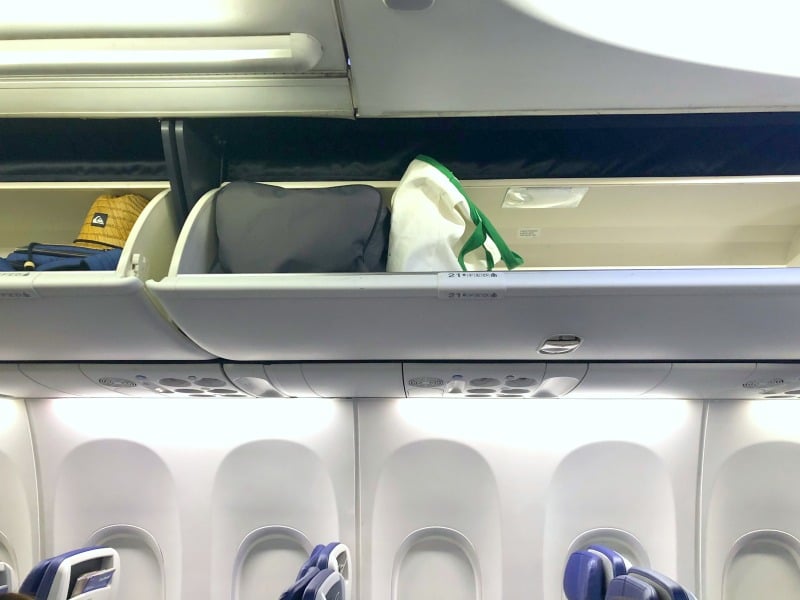
With Southwest charging for checked bags as of last spring, we've already witnessed how many more passengers are switching to packing in larger carry on bags like roll-aboards. And that means a real shortage of space in the bins, and more unwilling passengers being forced to gate check their carry-ons at the gate.
The problem is especially pronounced on flights aboard Southwest's smaller Boeing 737-700 aircraft, which mostly feature the less spacious older model of overhead bins (as well as on a few 737-800s that have an older configuration). Southwest's fleet will gradually get updated and this situation will improve over time, but in the near term, it's a real problem.
That means you want to avoid purchasing a Basic fare if you don't also have status or a Southwest credit card if boarding position matters to you at all. And even a Choice fare may not be enough to get your roll-aboard bag into an overhead bin.
Until a lot more data points from flying under this new system come out, we won't know how much of a struggle this process will be. Personally, I think most credit card holders in Group 5 and above will be able to count on stowing their carry on bags in the overhead bins somewhere (exactly where is another question though). Where it will get dicier is with non-cardholders who buy Choice Fares (especially aisle seats if that means Group 7 or 8). And forget about it for Basic Fares on all but half empty flights.
So until the dust settles, you may just want a Southwest credit card if you carry on a larger bag. Or, at the very least, Choice fare in a window seat might be a safer bet.
Editor's Note (2/18/2026): The reports from the last few weeks have been deafening: overhead bin space is a major problem. This is especially true in the front of the plane (where the premium extra legroom seats are located).
Southwest is actively making tweaks to the system right now (for example, there are many reports about flight attendants monitoring these bins to make sure passengers farther back in the plane don't use them). But passengers often are having no choice but to store roll-aboards many rows behind where they are seating, making both boarding and deplaning take longer.
Personally, I've changed all my seat assignments to Row 10 and farther back until this gets sorted out. And if you are flying on a Basic fare, it's more likely than not you'll have to gate check your bag and not get overhead bin space at all.
5. Families should (mostly) be able to sit together without paying extra, but...

Last but certainly not least, it's time to discuss what these seating changes mean for family travelers. Will Southwest separate young kids from their parents now that seats are a valuable commodity? We've all heard the horror stories on other airlines, and many of them have lived them. (I remember all too well how United once tried mightily to separate me from my 2 year old on an international flight).
One thing I loved about the Southwest of old was how easy it was to sit together as a family with young kids without paying extra. The airline's family boarding between groups A and B was always early enough in the open seating process that I could grab seats all together for my family, at least until my youngest aged out of family boarding when he turned 7.
Under Southwest's new system, families don't have a guarantee of contiguous seating if they don't pay more to select seats. But Southwest still claims to be the airline with heart, and it seems committed to trying not to separate kids from their parents. The exact fine print on the airline's website about family seating is as follows:
If you purchased a Basic fare, we will automatically assign your seats at check-in. Southwest will endeavor to assign a child (age 12 and under) a seat adjacent to one accompanying Passenger (13 and older) to the greatest extent practicable and at no additional cost.
Until more time has passed and a lot more families fly, however, we won't know how often this "endeavor" will fail. If I were a betting person, I'd guess it will all work out fine the vast majority of the time for families with young kids. (That said, there are already negative data points on Reddit less than 24 hours in.)
Keeping this promise, however, will be hard at peak holiday periods when a lot of families are flying at the same time. It might also be hard on routes that are frequented by a lot of Southwest frequent flyers and credit card holders with priority for seating.
And the real sticking point will surely be when there are major weather disruptions and flight cancellations that require re-accommodating a lot of passengers on already-very-full planes.
I will also bet that Southwest's awesome flight crews will work hard to resolve many of these family seating issues on board when it comes to that. Why do I believe that? Because I've seen them do the same for years in other extraordinary situations (like when a family had a tight connection and missed family boarding).
But some of us just don't want to deal with the stress of that unknown on a travel day. Some of us don't want to gamble.
If it's really essential to your family to be able to sit all together (and not just have 1 adult with each kid which is all that Southwest even endeavors to try for), you should suck it up and buy Choice fares instead of Basic so you can select your seats at the time of booking. No, it's not really fair to families and hits them in the pocketbook harder because they have to pay for that many more seats, but it's the unfortunately reality of the situation.
Or just get one of the higher annual fee credit cards that gives you an advance seat selection perk for free, especially if you fly Southwest more than once a year. That's what my family plans to rely on. Even the cheapest Southwest credit card (Plus, $99) will improve your chances, as you'll get to select your own seats at the 48 hour mark instead of relying on an algorithm that does it for you at 24 hours in advance.
Editor's Note (2/18/2026): There were a fair number of reports of families being separated in the first days of Southwest's new system, but those reports seem to have declined. It may have been that tweaks to the seating assignment algorithms were needed and have been made/are still being made. I still recommend having a credit card or buying a Choice fare if you really need to sit together, but I'm cautiously optimistic that Southwest is going to be able to avoid separating families most of the time, even on Basic fares.
Final Thoughts
The move to assigned seating on Southwest has been a controversial one, and there are still several open questions about how it will all work out and whether tweaks will need to be made. But as with most things in air travel, prepared and informed passengers (along with those willing and able to pay for perks) will surely fare better.


Matt H says
Helpful! Thanks, Leslie!
Kelly says
Any updates on the basic fare and kids placed by at least one adult?